
Are Industrial Engineers (IEs) really involved in Singapore’s MRT?
Yes — and in a very meaningful way.
Every morning, 3.49 million commuters step onto Singapore's MRT without a second thought. Trains arrive on time. Platforms never overflow. Maintenance happens quietly overnight. Behind this silent precision is a discipline most people have never heard of — Industrial Engineering.
The Mass Rapid Transit (Singapore) is often admired for its punctuality, cleanliness, and efficiency. While civil engineers design tunnels and electrical engineers handle signaling systems, Industrial Engineers (IEs) play a less visible but equally critical role: making the entire system work smoothly as one integrated operation.
Singapore's MRT: A Marvel by the Numbers
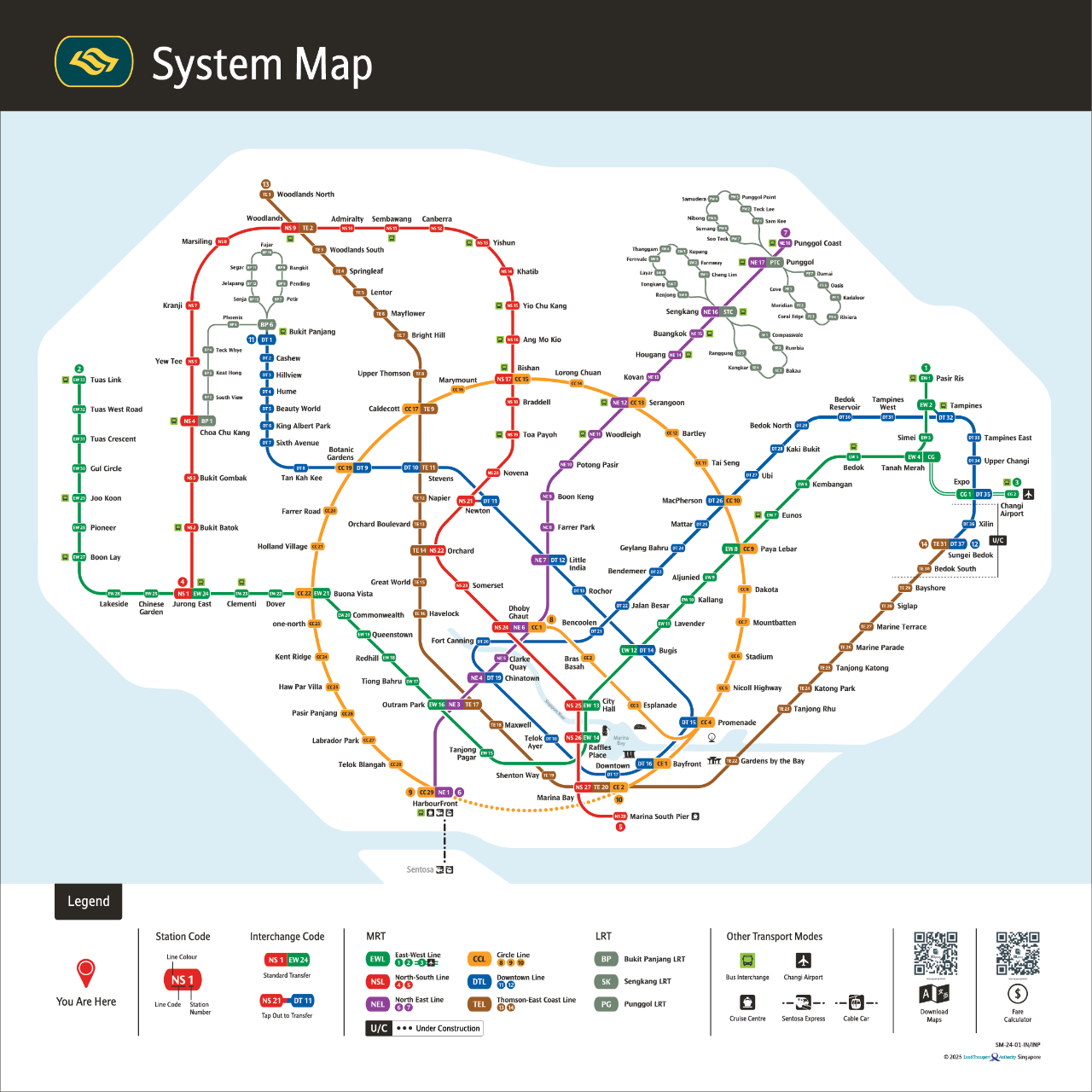
What started as a 6-kilometer stretch with five stations in November 1987 has grown into one of the world's most extensive and reliable urban rail networks. Today, the Mass Rapid Transit (MRT) system spans approximately 242.6 kilometers of grade-separated track, serving 143 operational stations across six lines — all on an island barely 730 square kilometers wide.
This scale of operations demands more than civil engineers laying tracks and train manufacturers building rolling stock. It demands a systems-level thinker — someone who asks not just "does it work?" but "does it work as efficiently as it possibly can?" That is where the Industrial Engineer enters the picture.
Real Proof: IEs Are Already Transforming Singapore's MRT
This isn't theoretical. There is documented, published evidence that Industrial Engineering methodologies have been applied directly to Singapore's MRT — and with measurable results.
The Train Operator Scheduling Breakthrough
One of the most compelling examples comes from a peer-reviewed study published in the Annals of Operations Research. Researchers applied Operations Research — a core IE tool — to solve the train operator scheduling problem at SMRT. At the time, SMRT operated two lines with 83 kilometers of track, 48 stations, and 77 trains running during peak hours.
The manual scheduling process was time-consuming, inconsistent, and unable to handle multiple competing objectives simultaneously. The research team designed a computerized scheduling system using a bipartite matching algorithm for night duties and a tabu search algorithm for day duties. The result? A fully automated system that produced demonstrably better schedules than the manual process — while also handling the complexity of multiple objectives inherent in crew management. This is Industrial Engineering in action: taking a messy, human-dependent process and replacing it with a rigorous, optimized system.
"The system automates the train-operator scheduling process at SMRT and produces favorable schedules in comparison with the manual process. It is also able to handle the multiple objectives inherent in the crew scheduling system."
— Annals of Operations Research, 2001 (Chew et al.)
AI-Powered Predictive Maintenance: Jarvis
More recently, SMRT's innovation arm Strides Technologies built an intelligent analytics platform called Jarvis — a system that exemplifies exactly what Industrial Engineering looks like in the age of artificial intelligence. Jarvis brings together data scattered across multiple maintenance and operations systems into a single analytics hub. Using machine learning and generative AI, it spots early signs of equipment faults and helps technicians analyze issues through a natural-language interface.
SMRT Group CEO Ngien Hoon Ping explained that the system helps engineers identify and repair faults faster: faults are geolocated, enabling engineers to zoom in for repairs quickly and efficiently. This kind of data-driven, process-optimization thinking — reducing unplanned downtime, improving the reliability of maintenance windows, and making engineers more effective — is quintessential Industrial Engineering.
With more than 50 SMRT engineers actively participating in the Jarvis rollout — some analyzing existing data, others coding AI agents — the human-machine collaboration model that IEs champion is being realized at scale on Singapore's rail network.
What exactly do Industrial Engineers do in MRT systems?
Industrial Engineering (IE) — a branch of Industrial Engineering — focuses on optimizing systems involving people, processes, materials, information, and technology.
In MRT systems like Singapore’s, IEs are typically involved in:
1. Operations Optimization
IEs help answer:
- How many trains should run during peak hours?
- How do we minimize waiting time without increasing cost?
They use:
- Queueing theory
- Simulation models
- Optimization algorithms
2. Passenger Flow Management
IEs study how passengers move through:
- Stations
- Platforms
- Interchanges
They help design:
- Entry/exit layouts
- Signage systems
- Crowd control strategies during peak hours and events
3. Scheduling and Reliability
IEs improve:
- Train frequency planning
- Maintenance scheduling
- Downtime reduction strategies
The goal is simple: maximum uptime, minimum disruption.
4. Safety and Risk Systems
IEs also contribute to:
- Evacuation planning
- Emergency response simulations
- Risk analysis for system failures
They ensure that efficiency never compromises safety.
5. Data-Driven Decision Making
Modern MRT systems generate massive data:
- Passenger counts
- Train delays
- Energy usage
IEs analyze this data to:
- Predict congestion
- Improve timetables
- Reduce operational costs
Why Singapore’s MRT is a good example of IE in action
Singapore’s MRT is globally known for:
- High punctuality rates
- Efficient transfers
- Clean and structured operations
- Continuous upgrades based on data
This is not accidental.
It is the result of multi-disciplinary engineering, where Industrial Engineers quietly act as the “system integrators” ensuring everything works together efficiently.
So do IEs “design” the MRT?
Not the tunnels or tracks directly — but they design the system behind the system.
If civil engineers build the skeleton, and electrical engineers power it, then Industrial Engineers are the ones ensuring the entire body moves efficiently, predictably, and sustainably.
Final Thought
Behind every smooth MRT ride in Singapore is not just infrastructure — but optimization thinking.
And that is exactly where Industrial Engineers shine.
They don’t just build systems. They make systems better.
Industrial Engineers: The Unsung Engineers Behind Singapore's MRT System